Fleet technology has changed almost every part of trucking.
ELDs replaced paper logs. GPS tracking improved fleet visibility. AI dash cams helped fleets review road events and protect drivers. Trailer tracking gave managers more control over assets.
But one important trailer task has remained mostly manual for decades:
Cranking trailer landing gear.
For drivers, manual landing gear operation can be physically demanding, repetitive, and frustrating. For fleet managers, it can affect driver experience, yard efficiency, equipment handling, injury-prevention efforts, and even retention.
That is why trailer landing gear automation is becoming one of the next important technology opportunities for trucking fleets.
Automated trailer landing gear can help fleets reduce manual cranking strain, improve trailer handling, support driver safety, and create a more modern driver experience.
What Is Trailer Landing Gear Automation?
Trailer landing gear automation uses powered technology to help raise and lower trailer landing gear without requiring the driver to manually crank the landing gear handle again and again.
Instead of depending only on physical cranking, an automated system can support push-button, authorized, or controlled landing gear operation.
The goal is simple: reduce manual effort, improve trailer handling, and make trailer operations safer, easier, and more consistent.
For fleets that run drop-and-hook operations, yard moves, high-volume trailer activity, or driver-sensitive routes, this can be a meaningful upgrade.
Why Manual Landing Gear Still Creates Problems
Manual landing gear cranking may look simple from the outside, but drivers know it can be one of the most physically irritating parts of trailer work.
Drivers may need to crank landing gear in:
- Hot weather
- Cold weather
- Rain or snow
- Tight yards
- Uneven ground
- Poor lighting
- Time-sensitive operations
- Heavy trailer conditions
- Busy drop-and-hook locations
Over time, this repetitive task can create strain on the shoulders, arms, back, and neck.
Even when no major injury occurs, manual cranking can still affect driver comfort, morale, and job satisfaction.
That matters because driver experience directly affects retention.
Why Fleets Should Care About Landing Gear Automation
Landing gear automation is not only a convenience feature. It can support several important fleet priorities.
1. Driver Safety
Reducing repetitive manual cranking can help reduce physical strain during trailer operations.
For safety teams, this can support broader injury-prevention efforts and show drivers that the fleet is investing in equipment that makes their daily work easier.
2. Driver Retention
Drivers notice equipment quality.
A fleet that gives drivers easier, safer, and more modern tools sends an important message:
We value your time, your health, and your daily experience.
In a difficult driver market, driver-friendly equipment can become part of a retention and recruiting strategy.
3. Operational Consistency
Manual processes depend on individual effort, conditions, and habits.
Automation helps make trailer handling more consistent by reducing reliance on repeated physical effort.
This can be especially useful in high-volume operations where trailers are dropped, hooked, moved, staged, or reassigned frequently.
4. Trailer Security
Landing gear automation can also support trailer security when combined with access control, automatic lockdown, and fleet visibility.
If a trailer can be automatically secured when disconnected, fleets gain another layer of protection against unauthorized movement.
5. Fleet Modernization
Fleets are already investing in ELDs, AI dash cams, GPS tracking, telematics, and safety tools.
Trailer landing gear automation is a natural next step because it improves the physical trailer operation itself.
Why This Technology Matters for Driver Hiring
Many fleets focus on driver hiring through pay, bonuses, and routes. Those are important, but equipment also matters.
Drivers compare companies based on:
- How hard the job feels
- How well equipment is maintained
- How much support they receive
- Whether the company invests in safety
- Whether the company respects driver time and physical effort
Automated trailer landing gear can help fleets create a more driver-friendly operation.
This can be especially important for fleets trying to attract experienced drivers, older drivers, owner-operators, and drivers who prefer equipment that reduces physical strain.
It may also support broader efforts to make trucking more accessible to a wider driver population.
Why Trailer Automation and Security Belong Together
Many fleets think about landing gear automation and trailer security as two separate issues.
They should not be.
When a trailer is disconnected from a tractor, the landing gear becomes part of the trailer’s physical condition and security posture.
A system that can automate landing gear operation and support trailer lockdown creates a stronger operational advantage than a simple powered crank.
The best fleet technology should help answer questions like:
- Who is authorized to move this trailer?
- Is the trailer disconnected?
- Is the landing gear secured?
- Has there been unauthorized activity?
- Can the back office control or approve access?
- Can the fleet receive alerts?
- Can the system reduce driver strain at the same time?
That is why trailer landing gear automation becomes more valuable when it is connected to trailer security, access control, and fleet visibility.
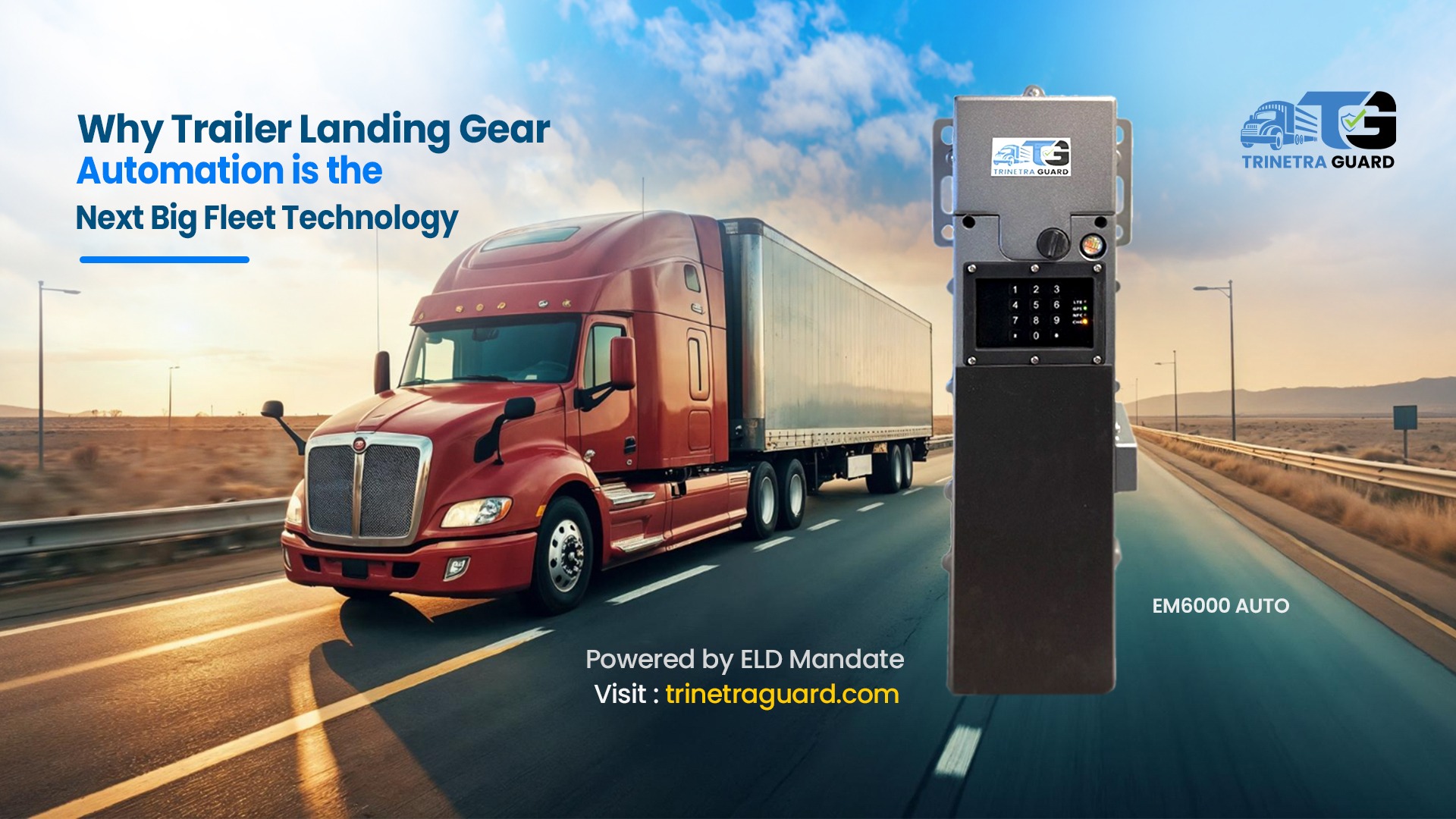
EM6000Auto by Trinetra Guard
EM6000Auto by Trinetra Guard is being developed as an autonomous trailer defense and landing gear automation system.
It is designed to help fleets:
- Automate trailer landing gear operation
- Reduce manual cranking strain
- Support driver safety and retention
- Help prevent unauthorized trailer movement
- Improve trailer security
- Add fleet visibility and control
- Support access authorization workflows
Instead of treating landing gear as a purely manual trailer component, EM6000 Auto brings automation, security, and fleet control into one system.
Who Can Benefit from Trailer Landing Gear Automation?
Trailer landing gear automation can be valuable for several types of organizations:
- Trucking companies that own trailers
- Private fleets
- Regional carriers
- Large fleets
- Trailer leasing companies
- Shippers
- Supply chain companies
- Drop-yard operators
- Fleet safety teams
- Risk-management teams
- Driver recruiting and retention teams
Any operation that depends on trailers can benefit from reducing physical strain, improving security, and making trailer handling more controlled.
The Future of Fleet Technology Is Moving to the Trailer
For years, fleet technology focused heavily on the truck and driver.
That made sense. ELDs, GPS tracking, dash cams, and telematics changed how fleets manage compliance and safety.
But the trailer is becoming the next important technology frontier.
Trailers carry the freight. Trailers sit unattended. Trailers move through yards, docks, and customer locations. Trailers are exposed to theft risk. Trailers also create physical work for drivers during drop-and-hook operations.
Landing gear automation is one of the clearest examples of how trailer technology can improve both operations and driver experience.
Final Thoughts
Trailer landing gear automation is not just a convenience feature.
It can support driver safety, reduce manual strain, improve retention, strengthen trailer security, and modernize fleet operations.
As fleets look for practical ways to improve driver experience and reduce operational risk, automated trailer landing gear will become a more important part of the conversation.
For fleets that own, lease, manage, or move trailers, the question is no longer whether trailers need smarter technology.
The question is:
How soon will trailer automation become a standard expectation?
Interested in trailer landing gear automation?
Learn more about EM6000 Auto by Trinetra Guard, designed to help fleets automate landing gear operation, reduce manual cranking strain, improve trailer security, and support driver retention.
[Book a Demo]
[Contact Trinetra Guard]