Truck drivers deal with far more than driving.
They inspect equipment, manage paperwork, communicate with dispatch, handle delays, navigate yards, connect trailers, disconnect trailers, and often perform physically demanding tasks that people outside the industry rarely see.
One of those tasks is manual trailer landing gear cranking.
For many drivers, landing gear cranking is not a one-time inconvenience. It is a repeated part of the job.
When done day after day, in different weather conditions and under different trailer loads, manual cranking can create strain on the shoulders, arms, back, neck, wrists, and hands.
That is why fleets should look at manual trailer cranking not only as an equipment issue, but as a driver safety and retention issue.
What Is Manual Trailer Cranking?
Manual trailer cranking is the process of using a hand crank to raise or lower the landing gear legs of a semi-trailer.
Drivers usually crank landing gear during drop-and-hook operations, trailer parking, trailer pickup, and trailer repositioning.
Depending on trailer condition, ground surface, load weight, gear condition, and weather, this task can require significant physical effort.
Some cranking may feel easy. Other cranking can be difficult, stiff, slow, or physically tiring.
That inconsistency is part of the problem.
Why Manual Cranking Creates Physical Strain
Manual landing gear cranking uses repeated upper-body motion.
Drivers may need to bend, twist, pull, push, rotate, and apply force while standing near the side of the trailer.
This can create stress on several parts of the body.
Shoulders
The shoulder is often involved throughout the cranking motion. Repeated rotation and force can create fatigue, discomfort, or irritation, especially when the landing gear is stiff or under load.
Arms and Elbows
Manual cranking requires repeated arm movement. Over time, this can contribute to soreness or fatigue in the arms and elbows.
Wrists and Hands
Drivers must grip the crank handle and maintain control while applying force. This can create strain in the wrists, hands, and fingers.
Back and Neck
Cranking posture is not always ideal. Drivers may twist or lean while cranking, especially in tight spaces or uneven yards. This can add stress to the back and neck.
Full-Body Fatigue
Even when the driver avoids injury, repeated cranking can still contribute to fatigue. Fatigue affects comfort, patience, morale, and overall driver experience.
Conditions That Make Cranking Harder
Manual trailer cranking is not always performed under ideal conditions.
Drivers may have to crank landing gear when:
- The trailer is heavily loaded
- The landing gear is stiff or poorly maintained
- The ground is uneven
- The yard surface is gravel, dirt, snow, or ice
- The trailer is dropped too high or too low
- The driver is working in rain, heat, cold, or wind
- The driver is rushing to make an appointment
- The yard is crowded or poorly lit
- The driver has already been on duty for many hours
These real-world conditions can make a simple task much harder.
Why Fleets Should Not Ignore Manual Cranking
Some fleet operators may see landing gear cranking as a normal part of trucking.
But “normal” does not mean it should be ignored.
Driver expectations are changing. Fleets are competing for experienced drivers. Safety teams are trying to reduce injury risk. Operations teams want smoother yard processes. Recruiters need a stronger equipment story.
Manual cranking affects all of these areas.
Driver Safety
Reducing repetitive physical strain can support injury-prevention efforts.
Driver Retention
Drivers are more likely to appreciate fleets that invest in equipment that makes daily work easier.
Recruiting
Driver-friendly equipment can help a fleet stand out when recruiting owner-operators or company drivers.
Operations
Automated or easier landing gear operation can help reduce delays and improve consistency.
Morale
Small daily frustrations add up. Reducing those frustrations can improve driver experience.
Manual Cranking and Driver Retention
Driver retention is not only about pay.
Pay matters, but daily work experience also matters.
Drivers often judge fleets by the equipment they are given. If the equipment is difficult, outdated, or physically demanding, drivers notice. If the equipment is modern, safer, and easier to use, drivers notice that too.
Automating a hard physical task sends a clear message:
The fleet is investing in the driver’s daily experience.
That message can support retention, recruiting, and company reputation.
Why Landing Gear Automation Is a Practical Solution
Landing gear automation helps reduce the need for repetitive manual cranking.
Instead of requiring drivers to crank landing gear manually each time, automation can support powered operation through a controlled system.
This can help drivers perform trailer handling tasks with less physical effort.
For fleets, the benefit is not only comfort. It can support:
- Driver safety programs
- Injury-prevention strategies
- Retention efforts
- Recruiting conversations
- Yard efficiency
- Modern fleet operations
- Better equipment perception
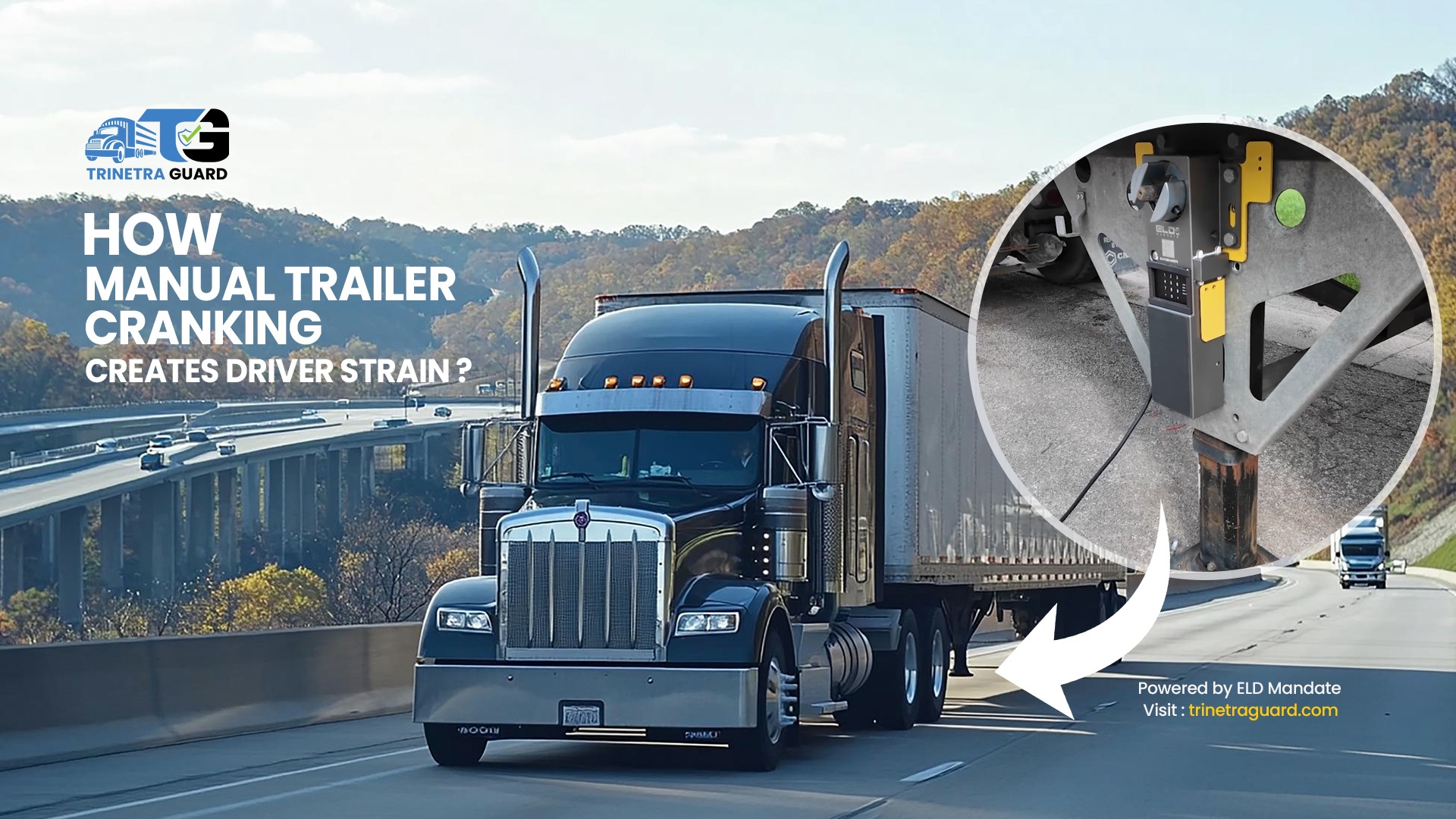
EM6000 Auto by Trinetra Guard
EM6000 Auto by Trinetra Guard is designed to help automate trailer landing gear operation while also supporting trailer security and unauthorized movement prevention.
The system is built around several fleet priorities:
- Reduce manual cranking strain
- Support driver safety
- Improve driver experience
- Help fleets protect trailers
- Support authorized access control
- Improve trailer security
- Help prevent unauthorized trailer movement
- Give fleet managers better visibility and control
This makes EM6000 Auto more than a convenience tool. It is part of a broader approach to safer, smarter, and more secure trailer operations.
Why Driver-Friendly Trailer Technology Matters
The trucking industry continues to face driver retention and recruiting challenges.
Fleets that want to attract and keep good drivers need to look beyond pay alone.
Driver-friendly technology can help by reducing unnecessary physical strain and improving the daily experience behind the wheel and around the trailer.
Examples include:
- Easier trailer connection workflows
- Better mobile apps
- AI dash cams that protect drivers with video evidence
- GPS visibility that reduces unnecessary calls
- Automated landing gear that reduces manual cranking
- Trailer security systems that reduce after-hours risk
When technology makes the driver’s day easier, it becomes part of the retention strategy.
What Fleets Should Ask Themselves
Fleet leaders should ask:
- How often are our drivers manually cranking landing gear?
- Which routes or yards create the most difficult cranking conditions?
- Are drivers reporting shoulder, back, arm, or wrist strain?
- Are older or experienced drivers frustrated by physical trailer tasks?
- Could easier trailer handling help with retention?
- Could automation help support safety and risk-management goals?
- Could trailer security and landing gear automation work together?
These questions can help fleets decide where automation may make the biggest impact.
Final Thoughts
Manual trailer cranking may seem like a small part of trucking, but for drivers, it can become a repeated source of strain and frustration.
Fleets that reduce manual cranking can support driver safety, improve driver experience, and create a stronger retention story.
Trailer landing gear automation is not only about making one task easier.
It is about modernizing trailer operations and showing drivers that their daily work matters.
Trinetra Guard’s EM6000 Auto is designed to help fleets reduce manual landing gear cranking, improve trailer security, and support driver-friendly fleet operations.