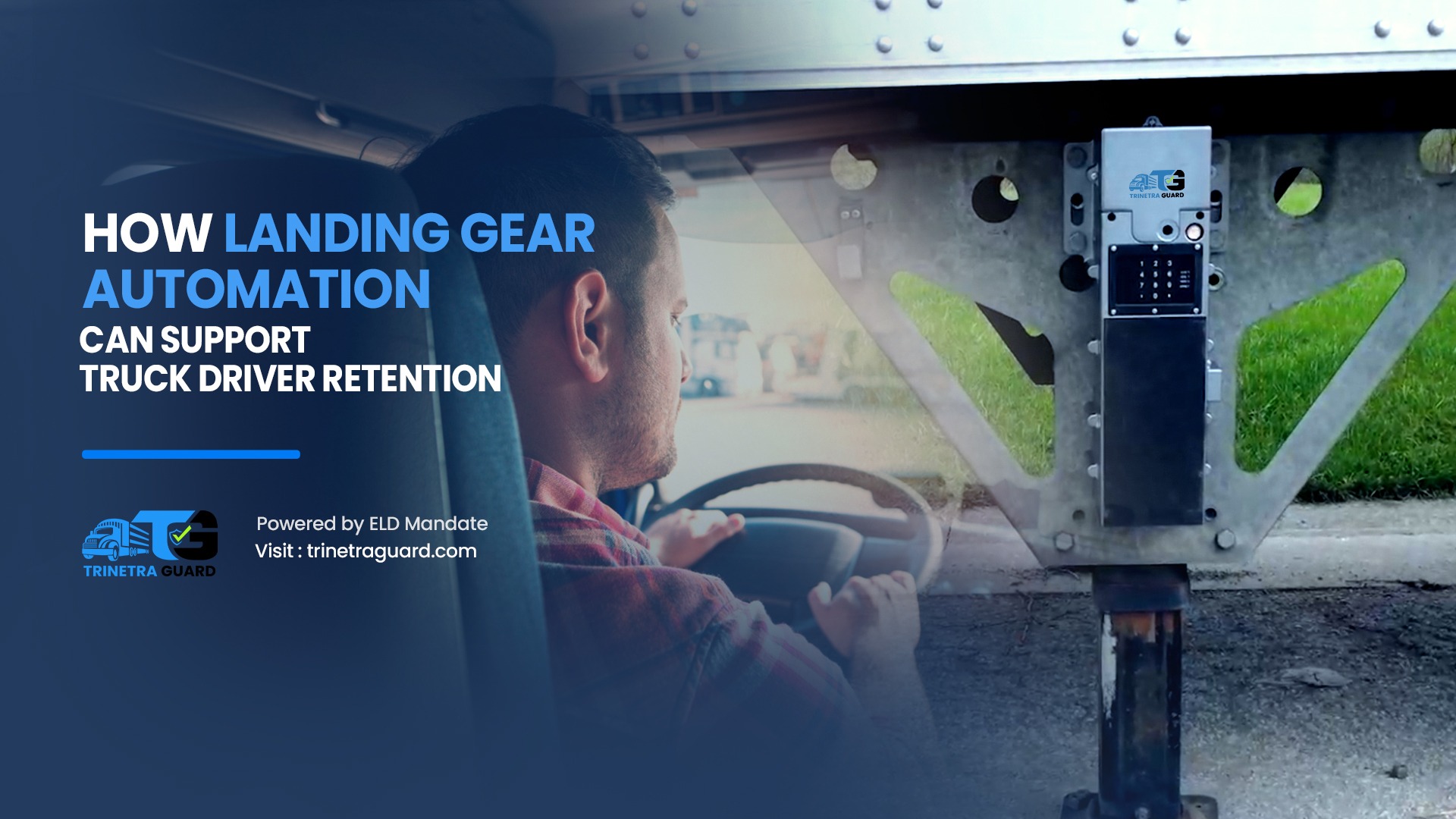
Truck driver retention is one of the most important challenges in trucking.
Fleets spend heavily on recruiting, onboarding, training, bonuses, advertising, and driver support. But drivers do not stay with a fleet only because of pay. They also stay because of how the job feels every day.
Equipment plays a major role in that daily experience.
If drivers deal with difficult equipment, repetitive physical tasks, poor support, and frustrating trailer operations, they notice. If a fleet invests in technology that makes their job easier and safer, they notice that too.
That is why landing gear automation should be part of the driver retention conversation.
Automated trailer landing gear can help reduce manual cranking strain, improve the driver experience, support safety programs, and show drivers that the fleet is investing in modern, driver-friendly equipment.
Driver Retention Is About More Than Pay
Pay is important, but it is not the only factor in driver retention.
Drivers also care about:
- Equipment quality
- Safety
- Dispatch communication
- Respect
- Home time
- Route planning
- Maintenance support
- Technology usability
- Daily physical strain
- Whether the company listens to driver concerns
A fleet may offer competitive pay but still lose drivers if the daily work experience is frustrating or physically demanding.
Driver-friendly technology helps address that problem.
Landing gear automation is one practical example.
Why Manual Trailer Cranking Affects Driver Experience
Manual landing gear cranking is a common part of trailer operations.
Drivers may crank landing gear during:
- Drop-and-hook operations
- Trailer parking
- Trailer pickup
- Yard movement
- Customer delivery
- Warehouse staging
- Trailer repositioning
The task can be physically demanding, especially when trailers are heavy, landing gear is stiff, ground is uneven, or weather conditions are poor.
Repeated cranking can create strain on:
- Shoulders
- Arms
- Back
- Neck
- Wrists
- Hands
Even when it does not lead to a formal injury claim, it can create fatigue, frustration, discomfort, and dissatisfaction.
These small daily frustrations add up.
Why Small Equipment Improvements Can Have a Big Retention Impact
Driver retention is often affected by repeated daily experiences.
A single hard crank may not cause a driver to leave. But repeated physical strain, combined with long hours, delays, equipment issues, and pressure from dispatch, can affect how a driver feels about the job.
When a fleet removes a difficult manual task, it sends a message:
We are paying attention to what drivers actually deal with.
That message matters.
Landing gear automation can become part of a larger retention strategy because it shows practical investment in the driver’s workday.
How Landing Gear Automation Supports Driver Retention
Landing gear automation should not be viewed as a standalone solution to driver turnover. Pay, home time, dispatch quality, management, equipment reliability, and working conditions remain important factors in retention. However, reducing repetitive physical tasks can improve one part of the driver's daily experience. For fleets already focused on driver satisfaction, automated landing gear can be one practical equipment improvement to evaluate.
1. Reduces Repetitive Manual Strain
Landing gear automation helps reduce the physical effort required to raise and lower trailer landing gear.
Less manual cranking can mean less repeated strain on the driver’s body.
2. Improves Daily Driver Experience
Drivers appreciate equipment that makes the job easier.
A push-button or automated landing gear process can reduce frustration and make trailer handling feel more modern.
3. Supports Older and Experienced Drivers
Experienced drivers are valuable, but repetitive physical tasks can become more difficult over time.
Reducing manual cranking may help fleets retain experienced drivers who still want to work but prefer equipment that reduces unnecessary strain.
4. Helps Owner-Operator Satisfaction
Owner-operators care deeply about time, equipment, and daily efficiency.
A trailer system that reduces physical effort and improves security may be appealing to owner-operators working with a fleet, leasing company, or shipper.
5. Strengthens Recruiting Conversations
Recruiters need real differences to discuss with drivers.
Landing gear automation gives fleets a concrete message:
Our trailers are built to reduce manual cranking and improve driver experience.
That is more meaningful than generic promises about being “driver-friendly.”
6. Supports Women Driver Recruitment
Reducing unnecessary physical barriers can help make trailer operations more accessible and comfortable for a broader range of drivers.
Landing gear automation should not be positioned as only for one group of drivers. It is useful for all drivers. But it can support a more inclusive equipment strategy.
7. Reinforces Safety Culture
When fleets invest in equipment that reduces strain, drivers see that safety is not just a slogan.
Technology can support the message that driver health, comfort, and long-term career sustainability matter.
Landing Gear Automation and Driver Injury Prevention
Driver retention and injury prevention are closely connected.
If a driver is hurt, strained, frustrated, or physically exhausted, retention becomes harder.
Manual cranking is a repeated motion. It can place stress on the upper body, especially in difficult conditions.
Landing gear automation can help fleets reduce this type of repetitive manual work.
For safety teams, this can support:
- Injury-prevention efforts
- Ergonomic improvements
- Driver wellness programs
- Equipment modernization
- Workers’ compensation risk discussions
- Driver satisfaction
The message should be clear and safe:
Landing gear automation helps reduce manual cranking strain.
Avoid saying it eliminates all injuries.
Landing Gear Automation and Fleet Reputation
Drivers talk.
They talk about equipment, dispatchers, pay, delays, maintenance, safety, and whether a company makes their job easier or harder.
A fleet that invests in driver-friendly equipment can improve its reputation among drivers.
That reputation can help with:
- Referrals
- Recruiting
- Retention
- Owner-operator interest
- Driver morale
- Safety culture
- Company image
Modern equipment becomes part of the employer brand.
EM6000 Auto by Trinetra Guard
EM6000 Auto by Trinetra Guard is designed to help fleets automate trailer landing gear while also improving trailer security and access control.
It is built around three important fleet needs:
- Driver Experience
Helps reduce manual cranking strain and makes trailer handling easier. - Trailer Security
Helps secure detached trailers and reduce unauthorized movement risk. - Fleet Control
Supports authorized access, GPS visibility, alerts, and back-office control.
This makes EM6000 Auto a strong fit for fleets that want to improve both driver experience and trailer security.
Why Driver Retention and Trailer Security Belong Together
At first, driver retention and trailer security may seem like separate topics.
They are connected.
A driver-friendly trailer system can reduce physical strain. A secure trailer system can reduce after-hours stress, theft concerns, and operational disruption. A connected trailer system can help the back office support drivers faster.
When fleets combine automation and security, they can improve the experience for both drivers and managers.
That is the power of EM6000 Auto:
Automate the trailer. Secure the trailer. Support the driver.
What Fleets Should Ask Drivers
Fleets evaluating landing gear automation should talk directly to drivers.
Useful questions include:
- How often do you crank landing gear each week?
- Which yards or routes create the hardest cranking situations?
- Have you experienced shoulder, arm, back, wrist, or neck strain from cranking?
- Are there trailers that are harder to crank than others?
- Would automated landing gear improve your daily experience?
- Would easier trailer handling affect how you view the company?
- What other trailer tasks create frustration?
Driver feedback can help fleets identify where automation should be deployed first.
Where Fleets Can Start
Fleets do not need to convert every trailer immediately.
They can start with:
- High-use trailers
- Drop-and-hook operations
- Routes with frequent trailer changes
- High-value freight trailers
- Older drivers’ routes
- Driver complaint hotspots
- Injury-risk locations
- Remote or unsecured yards
- Pilot programs with selected drivers
Starting with the highest-impact trailers can help fleets measure driver response, operational value, and security benefits.
Landing Gear Automation as a Recruiting Message
A fleet can use landing gear automation in recruiting by saying:
- We invest in driver-friendly equipment.
- We are reducing unnecessary manual cranking.
- We are improving trailer handling.
- We care about driver safety and comfort.
- We are modernizing trailers, not just trucks.
- We use technology to support drivers, not just monitor them.
This is a stronger message than generic driver appreciation.
It gives recruiters something specific and believable.
Final Thoughts
Driver retention is built through daily experience.
Pay matters. Respect matters. Dispatch matters. Equipment matters.
Landing gear automation gives fleets a practical way to improve one repeated part of the driver’s job.
By reducing manual cranking strain, improving trailer handling, and supporting safer, more modern operations, landing gear automation can become part of a broader retention strategy.
For fleets trying to attract and keep good drivers, the trailer itself can become a competitive advantage.
Trinetra Guard’s EM6000 Auto is designed to help fleets automate trailer landing gear, reduce manual cranking strain, improve trailer security, and support driver retention.
Frequently Asked Questions About EM6000 Auto
What is EM6000 Auto?
EM6000 Auto by Trinetra Guard is an automated trailer landing gear system designed to reduce manual cranking while supporting trailer security, authorized access, GPS visibility, alerts, and fleet control.
How can EM6000 Auto support truck driver retention?
EM6000 Auto can support driver retention by reducing repetitive manual cranking and making trailer handling easier. It can be part of a broader driver-retention strategy focused on improving daily working conditions and reducing unnecessary physical effort.
Does EM6000 Auto eliminate manual landing gear cranking?
EM6000 Auto is designed to automate the operation of trailer landing gear, reducing the need for drivers to perform repetitive manual cranking. The exact operation can depend on the trailer and system configuration.
Can EM6000 Auto help reduce physical strain for truck drivers?
Yes. One of the intended benefits of EM6000 Auto is reducing the physical effort associated with repeatedly cranking trailer landing gear. It should be viewed as a way to reduce a specific source of manual strain rather than as a guarantee against injuries.
Does EM6000 Auto provide trailer security?
EM6000 Auto is designed to combine landing gear automation with trailer security features intended to help reduce the risk of unauthorized trailer movement. Fleets should evaluate the system based on their specific security requirements and operating environment.
Does EM6000 Auto include GPS visibility?
EM6000 Auto supports GPS visibility as part of its connected trailer capabilities, allowing fleets to have greater visibility into trailer status and location.
Can fleets use EM6000 Auto to support driver-friendly equipment programs?
Yes. Fleets can include EM6000 Auto as part of a broader driver-friendly equipment strategy. Reducing repetitive manual tasks can demonstrate practical investment in improving the day-to-day driver experience.
Is EM6000 Auto suitable for all trucking fleets?
EM6000 Auto may be particularly relevant for fleets with frequent drop-and-hook operations, high trailer utilization, trailer security concerns, or a goal of reducing repetitive manual trailer tasks. Fleets should evaluate their trailer types, operating environment, and specific requirements before deployment.
Can a fleet start with EM6000 Auto on selected trailers?
Yes. A fleet can consider starting with selected high-use or high-priority trailers as part of a pilot program. Driver feedback and operational experience can then help determine whether wider deployment is appropriate.
How is EM6000 Auto different from traditional landing gear?
Traditional landing gear requires manual operation, while EM6000 Auto is designed to automate landing gear operation while adding connected security and fleet-control capabilities. This makes it more than simply an alternative way to crank landing gear.
[Book a Demo]
[Learn More About EM6000 Auto]