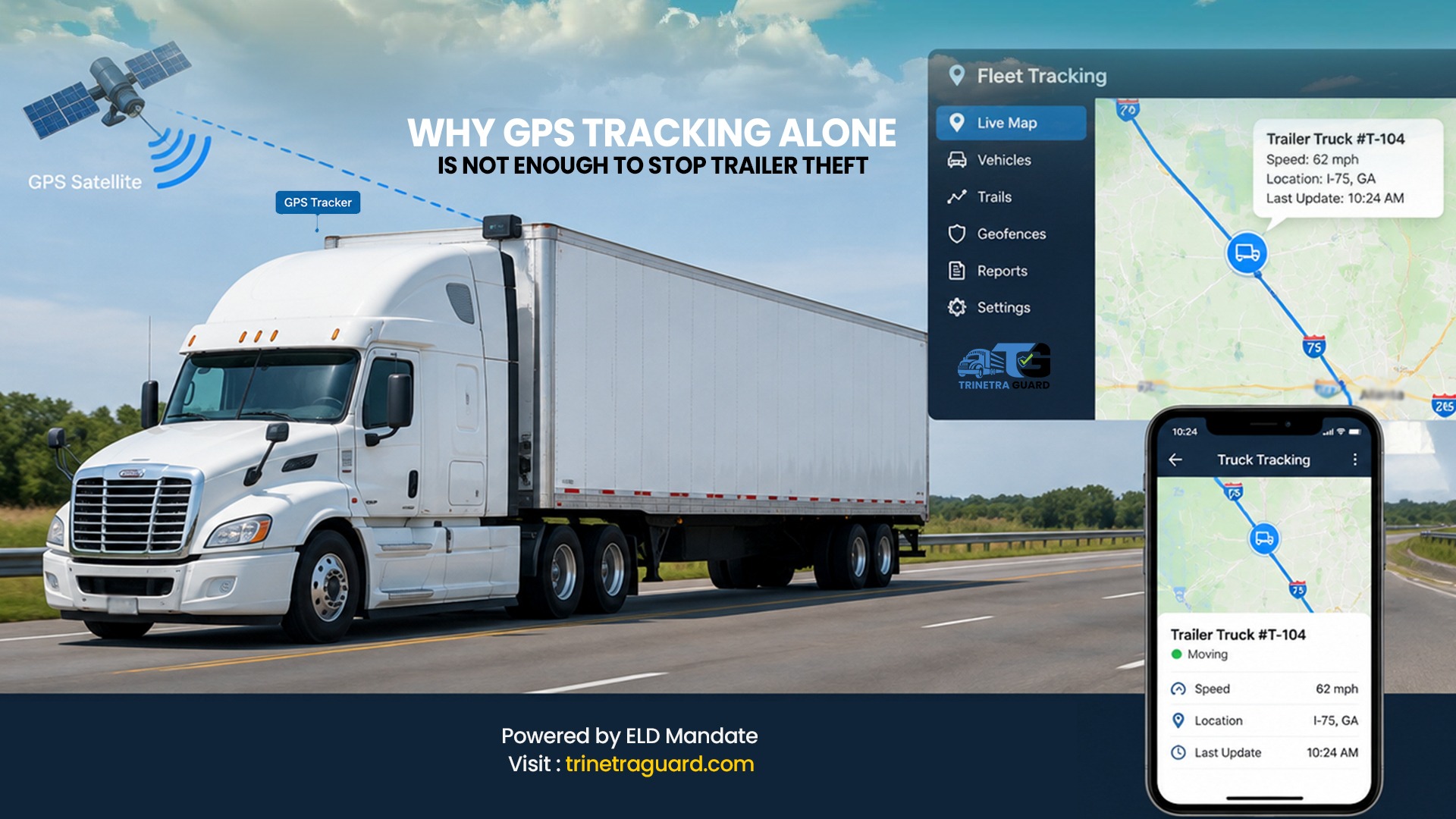
GPS tracking is valuable.
It helps fleets know where trailers are, review movement history, monitor assets, and respond when something goes wrong.
But GPS tracking has one major limitation:
GPS tells you where the trailer went after it moved. It does not physically stop the trailer from moving.
For trailer theft and cargo theft prevention, that difference matters.
A fleet that relies only on GPS may still discover the problem too late. By the time a trailer location looks suspicious, the trailer may already be gone, the cargo may already be at risk, and the recovery process may already be complicated.
That is why fleets need to think beyond tracking.
The next step is prevention.
GPS Tracking Is Visibility, Not Physical Security
GPS tracking gives fleets location visibility.
That is useful, but visibility and security are not the same thing.
A GPS tracker can help answer:
- Where is the trailer?
- Where did it travel?
- When did it move?
- Is it outside a geofence?
- What route did it take?
But GPS alone does not answer:
- Who connected to the trailer?
- Was the movement authorized?
- Did someone physically prevent the trailer from being moved?
- Was the trailer locked down when disconnected?
- Could the fleet stop unauthorized access before movement occurred?
This is why GPS should be viewed as one layer of a trailer security strategy, not the entire strategy.
The Problem with “Track After Theft”
Many trailer security programs are built around post-theft response.
A trailer moves. A geofence alert is triggered. The fleet checks the location. Someone realizes the movement was unauthorized. Then the recovery process begins.
That may be helpful, but it is still reactive.
By that point:
- The trailer has already moved
- The cargo may already be at risk
- The driver or dispatch team may not know who moved it
- Law enforcement may need to be contacted
- The fleet may face claim, customer, or delivery consequences
- Recovery may depend on how fast the team responds
Tracking can support recovery, but recovery is not the same as prevention.
Why Trailers Are Vulnerable
Trailers are especially vulnerable because they are often left unattended.
They may sit in:
- Drop yards
- Customer yards
- Distribution centers
- Warehouses
- Truck stops
- Remote lots
- Staging areas
- Overflow parking areas
In many cases, a trailer is separated from the tractor, the driver is not present, and the fleet may not have real-time physical control over who can connect and move it.
That creates risk.
If an unauthorized tractor can connect to the trailer and move it, GPS may only tell the fleet what happened after the fact.
Trailer Theft Prevention Requires Layers
A stronger trailer security strategy should include multiple layers.
1. Location Visibility
GPS tracking remains important. Fleets need to know where trailers are and when they move.
2. Geofence Alerts
Geofencing can alert the fleet when a trailer leaves an approved yard or location.
3. Event Monitoring
Door, tamper, movement, and other event alerts can help fleets identify suspicious activity.
4. Access Control
Fleets need to know who is authorized to move or access a trailer.
5. Physical Prevention
A trailer security system should help make unauthorized movement harder, not just easier to observe.
6. Back-Office Control
Dispatch, safety, or operations teams should be able to authorize, review, and respond from a central system.
When these layers work together, trailer security becomes more proactive.
Physical Prevention vs. Passive Tracking
Passive tracking helps fleets observe a problem.
Physical prevention helps fleets reduce the chance of the problem happening.
This is the key difference.
A GPS tracker may say:
The trailer has moved.
A physical prevention system should help answer:
Was this trailer authorized to move in the first place?
For fleets moving high-value freight or managing unattended trailers, that difference can be significant.
Why Manual Locks Are Not Always Enough
Manual locks can help, but they depend on human behavior.
A manual lock may be forgotten, skipped, misplaced, damaged, or applied incorrectly. It may also require the driver or yard worker to take an extra step every time the trailer is dropped.
In real fleet operations, extra manual steps are not always consistent.
A stronger system should reduce dependence on memory and manual behavior.
That is why automated trailer lockdown is important.
When security becomes part of the trailer workflow, fleets gain more consistency.
How EM6000 Auto Changes the Conversation
EM6000 Auto by Trinetra Guard is designed to combine trailer landing gear automation with trailer security and access control.
Instead of relying only on GPS visibility after movement, EM6000 Auto is designed to help prevent unauthorized trailer movement before it happens.
The system supports:
- Automated landing gear operation
- Auto-lockdown security
- Authorized access workflows
- Back-office control
- GPS visibility
- Security alerts
- Trailer event monitoring
- Driver-friendly operation
This creates a more complete trailer security approach than GPS tracking alone.
GPS Still Matters - But It Should Not Stand Alone
GPS tracking is still valuable.
Fleets should use GPS to monitor trailer location, review movement history, support dispatch visibility, and help with recovery if needed.
But GPS should be paired with systems that help prevent unauthorized movement.
The best approach is not GPS or physical security.
It is GPS plus physical security.
That means:
- Track the trailer
- Control access
- Detect suspicious activity
- Lock down the trailer
- Alert the fleet
- Give the back office visibility
- Help prevent unauthorized movement before it becomes a recovery problem
Who Needs More Than GPS Tracking?
A GPS-only approach may not be enough for:
- Fleets with unattended trailers
- Drop-and-hook operations
- Trailer leasing companies
- High-value cargo carriers
- Shippers with staged trailers
- Private fleets
- Regional carriers
- Distribution centers
- Fleets using remote or shared yards
- Companies with repeated trailer theft exposure
- Insurers and risk-management teams
If a trailer can sit unattended, it may need more than location tracking.
Trailer Security Is Becoming a Fleet Priority
Cargo theft, unauthorized trailer movement, and yard security are becoming larger concerns for many transportation and supply chain organizations.
At the same time, fleets are under pressure to improve driver safety, reduce claims, protect assets, and operate more efficiently.
This is why trailer security is moving from simple tracking to active prevention.
Fleets do not just want to know where a stolen trailer went.
They want better control before the trailer moves.
Final Thoughts
GPS tracking is important, but GPS tracking alone is not enough to stop trailer theft.
It helps fleets locate and monitor trailers, but it does not physically prevent unauthorized movement.
For stronger trailer security, fleets need a layered approach that includes GPS visibility, alerts, access control, automatic lockdown, and physical prevention.
That is the future of trailer theft prevention.
Trinetra Guard’s EM6000 Auto is designed to help fleets go beyond GPS tracking by combining trailer landing gear automation, auto-lockdown security, authorized access, alerts, and fleet visibility.